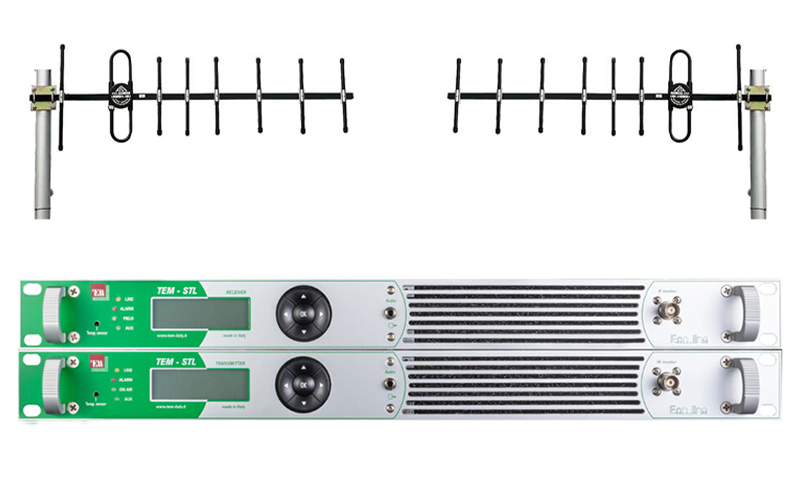
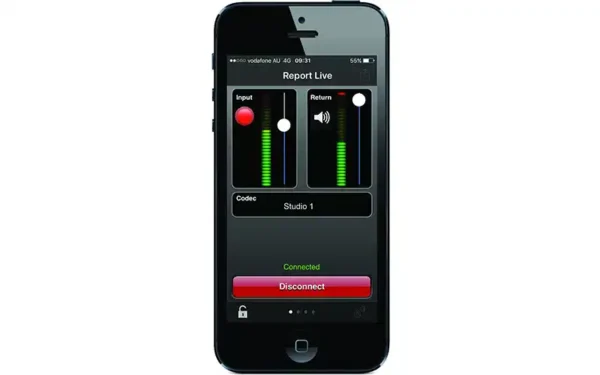
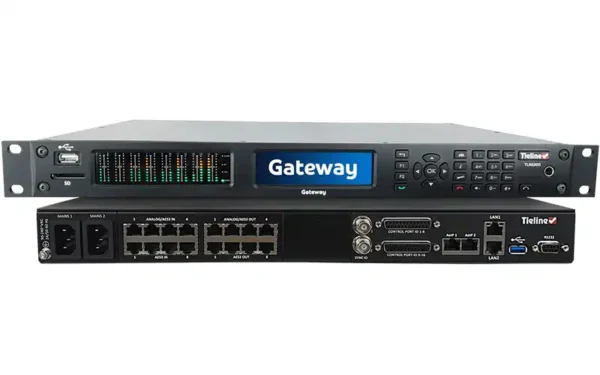
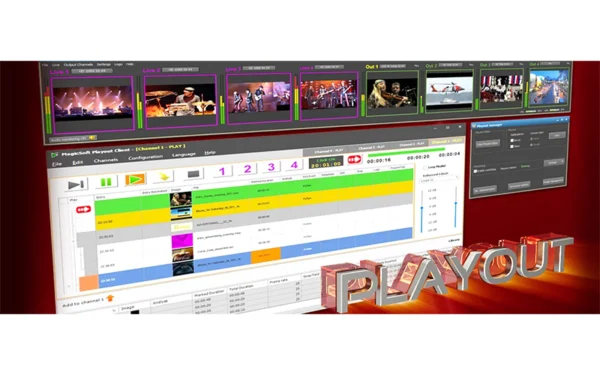
TEM STL 48-1100MHz studio to transmitter link delivers wideband VHF/UHF audio transport with clean MPX/mono performance for reliable studio-to-site connectivity.
$ 3,662.75
The TEM STL 48-1100MHz studio to transmitter link is a synthesized FM radio link designed to carry high-quality audio from studio facilities to FM transmitter sites over VHF and UHF bands. Covering a wide frequency range from tens of MHz up into the low GHz region, this STL system allows broadcasters to select clean spectrum windows and coordinate frequencies with local regulators. Transmitter and receiver frequencies are set in small steps from the front panel display, simplifying re-channelization when sites are reconfigured or moved.
Built for continuous service, the TEM STL 48-1100MHz uses solid-state RF stages with adjustable RF power so engineers can match path budgets and antenna gains without overdriving coax or combiners. The compact 19‑inch rackmount chassis integrates local LCD/OLED control, metering and basic alarm reporting, making the link easy to monitor alongside FM transmitters and audio processing in the same rack.
The RF section operates across multiple synthesized bands between roughly 48 and 1100 MHz, providing narrow operating windows within each band to suit coordinated STL channels. Frequency synthesis with 10 kHz steps ensures precise tuning and stable operation, while internal band-pass and low-pass filtering deliver low spurious and harmonic radiation compatible with broadcast spectrum masks. Output power is adjustable over a broad range, typically from a few watts up to around 20–25 W depending on model, allowing both short urban hops and longer rural paths with directional antennas.
Protection features include RF mute on fault, soft-start of the RF carrier and automatic level control that holds output power at the set value as mains and load conditions vary. Front-panel status indicators and metering for forward power, supply conditions and alarms help engineers quickly diagnose antenna or feed-line issues at the link ends.
The baseband section supports balanced analog audio, composite MPX and auxiliary channels so a single STL can transport mono or stereo program audio plus RDS or SCA subcarriers. Typical audio specifications include adjustable input level, 600 Ω or 10 kΩ input impedance, audio frequency response from about 30 Hz to 15 kHz and very low noise and distortion suitable for modern FM processing chains. In composite mode, wideband response up to roughly 100 kHz allows transparent transport of processed MPX from the studio to the transmitter input.
These characteristics make the TEM STL 48-1100MHz ideal for point-to-point studio to transmitter links, inter-city relay hops and drive-in or remote site applications where IP connectivity is unavailable or too variable. The system can also be used to feed multiple FM transmitters where the STL receiver MPX output drives several low- or medium-power transmitters via splitters and distribution amplifiers.
For alternative VHF/UHF STL packages, engineers can consider complete kits such as the
Sinteck Strider STL including VHF/UHF antennas or the
Suono UHF STL which bundle link equipment and antennas in a single package. For higher power paths or different band plans, other synthesized STL platforms can be reviewed in the main
STL – Radio Links category to match distance, frequency and redundancy requirements.