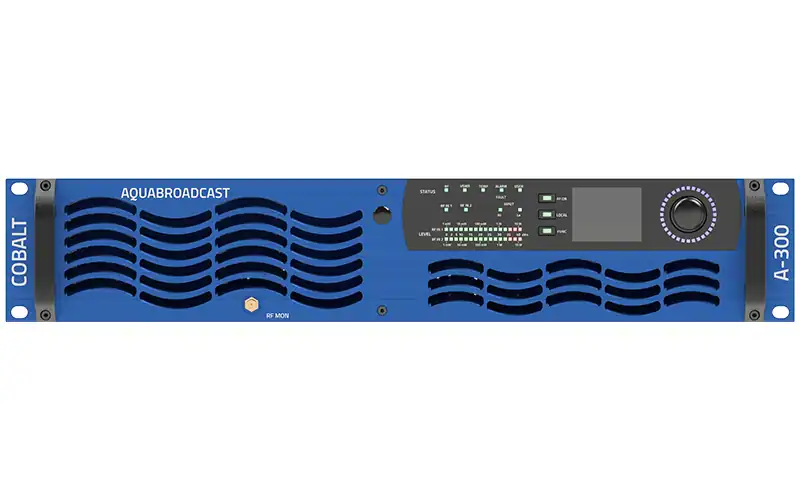
Aqua Cobalt A-300 Amplifier provides efficient, protected 300W RF power for professional FM broadcast transmitters.
$ 4,874.90
The Aqua Cobalt A-300 Amplifier is a compact, solid-state RF stage designed to deliver stable 300W output into modern FM broadcast systems. It is engineered for integration into FM transmission systems where high efficiency, low distortion and tight VSWR protection are critical. This robust design extends the Aqua Broadcast Cobalt platform, giving engineers a reliable building block for medium-power transmitters and modular systems. As part of the wider Aqua Broadcast product line, it maintains consistent RF performance and serviceability across your network.
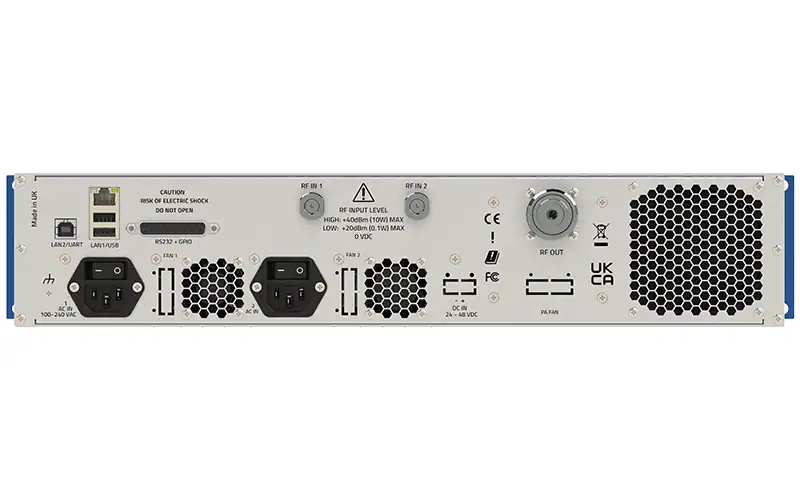
The Cobalt A-300 provides an RF input from a low-power exciter and a 50Ω RF output via a high-power coaxial connector, typically 7/16 or N-type depending on configuration. Rear-panel terminations support mains AC input, remote interlocks, telemetry contacts and, where fitted, Ethernet or serial links for control and status.
In daily use, the Aqua Cobalt A-300 Amplifier sits downstream of your exciter or integrated transmitter, delivering clean, stable power into the antenna system with minimal operator intervention. Engineers benefit from fast visual feedback, predictable gain and comprehensive fault protection, making it suitable for main, backup or translator sites where continuous service is essential. Its efficient cooling and robust RF design help maintain output power in demanding environments, reducing maintenance time and improving overall system uptime.